
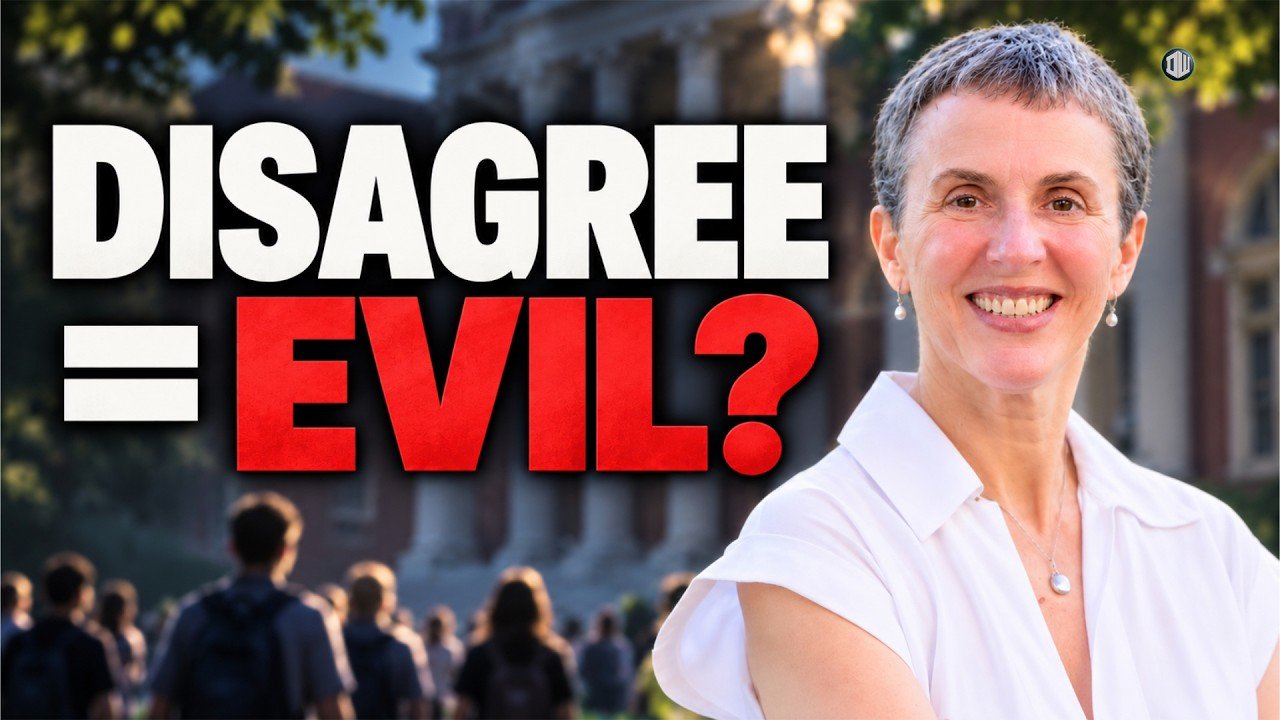
Political disagreement is no longer just about who is right. Increasingly, it becomes evidence that the other person is ignorant, immoral, bigoted, or dangerous.
Professor Ilana Redstone joins Big John to explain how certainty turns disagreement into moral condemnation, and why that can become especially damaging when institutions treat contested assumptions as settled truths.
In this episode, they discuss:
• the difference between confidence and epistemological certainty
• why democracy manages disagreement rather than resolving it
• how moral claims become embedded in universities, media, law, and public institutions
• disparate-impact reasoning, DEI, and the backlash it helped produce
• why the political right can fall into the same certainty trap
• a tougher alternative to ordinary steel-manning
Redstone, author of The Certainty Trap, discusses her forthcoming book, Presumption of Guilt: How Equating Inequality with Injustice Fractured American Democracy, expected in April 2027.
Ilana Redstone:
https://ilanaredstone.com
Big John:
📜 Substack: https://substack.com/@BigQuestions
🔔 Subscribe for more: http://dw.tny.cc/YT_Sub
🎙️ More Big Questions: http://dw.tny.cc/BigQuestions
Chapters:
00:00 Why disagreement becomes a moral judgment
01:20 The Certainty Trap
04:53 Confidence vs. certainty
09:56 Four kinds of claims
16:10 When political views become moral evidence
22:26 How institutions acquire epistemic authority
26:20 Civil-rights law and disparate impact
33:10 Correlation, causation, and institutional lessons
41:08 Has the pendulum swung to the right?
44:14 How institutions can make room for disagreement
51:55 A harder test than steel-manning
55:25 The Final Five
#PoliticalDisagreement #FreeSpeech #BigQuestions
source

